|
|
| ||||
|
長青通訊 第三十六期 EHVA Newsletter No. 36長青健康素食推廣中心 發行 二OO六年十二月本期目錄
本季服務及工作報告
歡迎義工共襄盛舉
| |||||||||||||||||||||||||||||||||||||||||||||||||||||||||||||||||||||||||||||||||||||||||||||||||||||||||||||||||||||||||||||||||||||||||||||||||||||||||||||||||||||||||||||||||||||||||||||||||||||||||||||||||||||||||||||||||||||||||||||||||||||||||||||||||||||||||||||||||||||||||||||||||||||||||||||||||||||||||||||||||||||||||||||||||||||||||||||||||||||||||||||||||||||||||||||||||||||||||||||||||||||||||||||||||||||||||||||||||||||||||||||||||||||||||||||||||||||||||||||||||||||||||||||||||||||||||||||||||||||||||||||||||||||||||||||||||||||||||||||||||||||||||||||||||||||||||||||||||||||||||||||||||||||||||||||||||||||||||||||||||||||||
 |
|
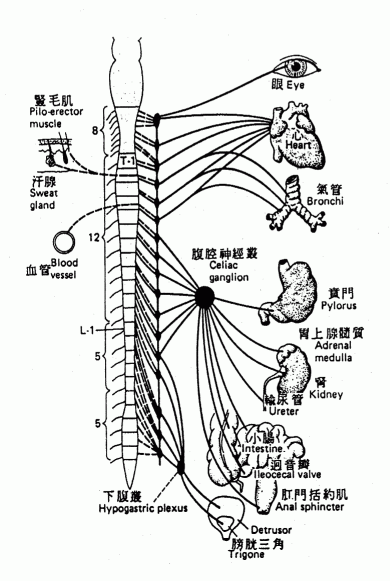
〈圖一 人體的神經系統〉 |
|
|
簡單的說,就是直接對背上的長肌,透過針灸、推拿的方法,放鬆長肌、強化長肌,達到維持健康的方法。〈本篇以推及拿推為主要介紹〉
被服務者俯臥。如〈圖四〉所示,〈1〉〈2〉為背部兩道長肌的內側,〈3〉〈4〉為其外側;操作時從下往上,按照〈1〉〈2〉〈3〉〈4〉順序,做相等的次數。 服務者操作時,以手的大拇指和食指、中指為主〈此謂三指訣,如圖五〉。先用左手的大拇指按壓長肌深處,再用大拇指、食指和中指將肌肉提捏起來,然後交給右手的大拇指、食指和中指。此時右手的大拇指下壓同時往前推,食指和中指配合大拇指,提捏前進,而後左手再重複右手的動作。如次一步一步地從腰部推到肩部。〈長肌拿推必須要是連續動作,中途不可間斷〉
 |
 |
|
〈圖四 華陀夾脊〉 |
〈圖五 華陀夾脊 拿推法〉 |
Translated by Parkson Wong
(Chinese version『 寧神、益智方劑食療說〈三〉』by Dr. Hung-Ying Shih was published on EHVA
Newsletter (31), Sept, 2005)
As early as two hundred and fifty million years ago, when dinosaurs were still roaming the earth in the Jurassic period, Ginkgo biloba was one of the most prosperous plants in China. Ginkgo biloba still has the same elegant appearance as the ancient plant. It is not only a living fossil of China, it is a living fossil of the world; its surviving abilities are shocking – even in the most harsh environments. After the atomic bombings of Hiroshima and Nagasaki, It is the Ginkgo biloba that first grew again.
Ginkgo biloba is a deciduous tree and a member of the Ginkgo family. Semen Ginkgo, the seed of Ginkgo, gets its common name "white fruit白果 " from its shape and color. The uses of Semen Ginkgo as medicine, functional food, or ingredient in daily dishes are well documented throughout history in Chinese articles and medical publications. According to the Compendium of Materia Medica (本草綱目), the Semen Gingko can calm asthma and sooth coughing. Together with Yi Zhi Ren益智仁, and Sang Piao Xiao桑螵蛸, Semen Ginkgo is often used in herbal formulas to treat urinary tract problems such as frequent micturition and enuresis. In Taiwan, a soup prepared using Semen Ginkgo as the main ingredient, together with white peppercorn and pig bladder, is used to treat a child's bed wetting problem with good results. Semen Ginkgo is also commonly used for its taste in daily dishes and soups. Raw Semen Ginkgo is often prescribed to eliminate phlegm and calm asthma, but be careful not to take large quantities because of its toxicity (Semen Ginkgo contains small amounts of cyanic acid and Ginkgo toxin). A safe dosage of 7 to 10 cooked Semen Ginkgo can help eliminate wetness and benefit frequent micturition problem without the worry of poisoning.
There is very little recorded use of Ginkgo leaves in traditional Chinese medicine publications. Recently, German researchers have studied the active ingredients of Ginkgo leaves extract and have successfully isolated flavones, biflavones, and various ginkgolides. The health benefits of flavones include improving circulation and preventing cardiovascular diseases. Flavones can improve the function of platelets reducing the possibility of thrombosis. It can also expand the blood vessels and improve both the systemic and the pulmonary circulation. Therefore, it can prevent cardiovascular diseases, cerebral thrombosis and stroke.
Flavones are good anti-oxidants; they protect the body from free radicals. Free radicals can harm body tissues and healthy cells making the body more susceptible to disease and sickness. Adding flavones in our diet can help keep the body healthy and slow down the aging process.
In Germany, the Ginkgo leaf extract (EGb 761) has been extensively used by the elderly to prevent Alzheimer's disease. When people get older, their brains start to age so their cognitive ability, clarity of the mind, and memory ability all start to decline. In 1997, New York Institute for Medical Research published a research result that Gingko leaves extract can slow down dementia. Recently, study has also shown that Ginkgo leaves can lessen depression, a common mental problem of the elderly.
Yes, Ginkgo leaves are poisonous. Ginkgo leaves contain Ginkgolic acid. When consumed in large quantities or used for prolonged amounts of time Ginkgo leaves can cause heart damage. It is difficult to control the dosage with Ginkgo leaves tea. Care has to be taken when using Ginkgo extracts. In order to protect the public, WHO (World Health Organization) recommends that Ginkgo extracts cannot contain more than 1 ppm (parts per million) of Ginkgolic acid.
We should follow the directions of the products. In United States, Ginkgo products are listed as food supplements, but one should still use as directed and not exceed the recommended dosage. The fresh or dried Ginkgo leaves have higher flavones content, but it does not mean they have less Ginkgolic acid. We do not recommend using Ginkgo leaves as a tea for regular use.
A research report from King's College of England suggested that cauliflower, potato, orange, apple and daikon (radish) can all improve people's memory.♁
林溫裕 摘譯自 Consumer Reports On Health, Volume 18, No.11,Nov. 2006
年紀大了,或許記憶力會衰退,但是人腦對於老化相當有抵抗力。許多研究證實,人們可利用腦的適應力來保持記憶力與靈敏度;有些人雖然腦部組織退化到類似愛茲海默症的狀態,但從外表看不出任何跡象。當部分腦細胞受損時,人腦似乎有內在的能力,重新連接神經電路,利用其他區域的腦細胞,替受損細胞工作。
研究發現:即使是簡單生活方式可以增強腦的適應力。美國加州大學洛杉磯分校研究員做了以下的臨床試驗:他們將參與試驗的人分為兩組,第一組包括八位健康的中年人。他們做以下為期兩星期的生活方式改變:走路、做拼圖或用腦力的活動、改善飲食習慣、做些放鬆身體的運動以紓解壓力。第二組的九位參與者則不做任何改變。試驗結果是第一組成員言語表達能力進步很多,第二組則無改變。第一組成員透過腦掃描〈brain scan〉顯示腦的效率提高〈負責記憶力區域所用的能量較少〉。 生活方式的改變有助於保護心臟、血管〈供給腦部血液〉,並降低得對腦有害疾病的危險性。維生素B12不足、甲狀腺功能不足、輕度中風、高血壓、頸部大動脈狹窄都會傷害到腦。
根據最新研究,以下是保持腦部年輕及敏銳度的方法。
壓力會促進損害記憶、破壞腦細胞荷爾蒙的產生。2006年6月一項針對300位長輩的研究指出,每一種新的壓力,如壞的消息、家庭糾紛、過份的工作要求,會使記憶力減退。
2006年8月發表的臨床實驗報告:哈佛大學研究員指定8位長輩〈年齡65歲至80歲〉每天做20分鐘靜坐及放鬆的運動。五星期後這些長輩的注意力、反應力都進步很多。
建議:每天有固定的時間做減壓活動,如:靜坐、瑜珈、聽音樂或任何一樣能讓你靜下心的活動。事前計劃妥善,免得囤積太多工作。當你感到壓力大時,可與家庭成員、朋友或專業輔導員談談。
與家人和朋友保持密切關係可以保護腦力心智。2006年5月一項針對89位80多歲長輩的研究,顯示出社交圈較廣的比社交圈窄的人認知能力〈cognitive ability〉要強。理論上,參與社交活動可以幫助減壓、刺激腦力。
建議:每個月至少和親友聯絡一次,考慮參加一些社團活動、選舞蹈課、做志工。 維持腦力的營養素
到目前為止,還不能證明任何添加物:如銀杏〈ginkgo biloba〉、貝他胡蘿蔔素、維生素C、E、B能提高或維持腦力,但是飲食對腦力維持的幫助是有證據的。UCLA的一項研究指出,當參與者多吃omega-3脂肪酸及抗氧物時,飲食生活方式改變有助於腦力的保持。
研究猜測蔬果中的抗氧成分可以保護血管及神經細胞。 哈佛研究員在一篇發表於2005年5月,針 對1300位參與者的研究報告中指出,每 天吃超過5份〈serving〉蔬果的女性比少 於兩份蔬果的女性,更能保持記憶力。最 有用的蔬果是綠色帶葉蔬菜,如:菠菜、 chard、和十字花科蔬菜〈如:青花椰菜、 白花椰菜〉。在經過六年的研究發現經常 食用這些蔬菜的女性,外表往往比實際年 齡年輕1-2年。
果汁與蔬菜汁也有同樣的益處:在一個歷 經十年針對1800位年紀大者的研究中,發 現一星期中喝蔬菜果汁超過三次以上者, 得愛茲海默症的機率比那些甚少喝蔬果 汁者少76%。
許多研究指t 出在魚或魚油、橄欖油或其他植t 物油裡的Omega-3不t 飽和脂肪可以減少發炎,t 幫助腦神經細胞再生,t 因而t 避免腦細胞老化。一項發表於2005年12月,t 針對t 3700位芝加哥地區年紀大 者的六年研究報告,指出一星期至少吃一次魚的人比那些不吃魚的能保持腦力。相反的,飽和油脂和反式油脂會加速腦功能的退化,大量攝取飽和及反式油脂會加速認知力退化,並增加得愛茲海默症的機率。
建議:
減少食用反式油脂,注意食物的標籤。
減少食用油炸的食物。
減少食用飽和油脂-少吃肥肉和全脂奶製品
多吃魚和健康油脂。
每天至少吃五份蔬果,包括綠葉蔬菜及十字花科蔬菜。
定期運動是防止腦功能衰退最好的方法,這是因為它可以保護供應血液至大腦的心血管系統。2006年1月一項針對1700個西雅圖年紀大者的六年研究中發現,一星期至少走路三次的人比起不運動的人,得痴呆症的機率少30%。
建議:剛開始可以做五分鐘的有氧運動。例如:快速走路、騎腳踏車或跳有氧舞蹈。以後可以逐漸增加到一星期七天,每天至少30分鐘。有心血管疾病和超過50歲的人想要做較激烈運動時,最好先請教家庭醫師。
2004年6月的一項研究分析發現,腦力激盪與認知能力有關,也可以減少因老化的記憶力損失。最近的臨床試驗發現,記憶力訓練及智力練習可以維持或增強老年人的認知力。
其他研究指出腦力的鍛鍊可以刺激腦內新細胞的成長。2006年8月的一項報告發現腦力 訓練對腦有持續性的效果。舊金山加大的研究員將182位年紀大的人分成兩組,一組在家做電腦訓練腦力的題目,看教育性的電影; 另一組不做任何訓練。八個星期之後,電腦組作題目的速度是他們剛開始參加時的八倍,他們的記憶力也改善很多。
建議:培養能激發腦力的嗜好,譬如:背詩、學習識別鳥類,以訓練記憶力。利用下棋或打橋牌,訓練專注力。做字謎以訓練語言能力。學習樂器,訓練協調力和腦的速度。♁
| – 長青素食譜 | ||||||||||
| 材 料; | 苦瓜 | 1大條 | 紅蘿蔔 | ¼ 根 | ||||||
| 豆腐 | 1 盒〈14oz〉 | 芹菜 | ¼ 根 | |||||||
| 孛薺 | 2 個 | 薑 | 少許 | |||||||
| 青江菜 | 12 片 | 橄欖油 | ½湯匙 | |||||||
| 新鮮香菇 | 1 朵 | |||||||||
| 調 味 料: | A:1.胡椒粉 | ¼ 茶匙 | 2.海鹽 | ¼ 茶匙 | ||||||
| 3.香油 | ¼ 茶匙 | 4.糖 | ¼ 茶匙 | |||||||
| 5.藕粉 | 2湯匙 | 6.太白粉 | ½ 湯匙 | |||||||
| B:1.醬油 | 3湯匙 | 2.糖 | 1茶匙 | |||||||
| 3.水 | 3 碗 | |||||||||
| 做 法: |
|
|||||||||
| – EHVA Recipe | ||||||||||
| Ingredients: | Bitter melon | 1 (large) | Carrot | ¼ | ||||||
| Tofu | 1 (14oz) | Celery | ¼ stalk | |||||||
| Water chestnut | 2 | Ginger | 4 slices | |||||||
| Bok choy | 12 pieces | Olive oil | ½ Tbsp | |||||||
| Soaked shitake mushroom | 1 | |||||||||
| Seasoning: | A:1.White pepper | ¼ tsp | 2.Salt | ¼ tsp | ||||||
| 3.Sesame oil | ¼ tsp | 4.Sugar | ¼ tsp | |||||||
| 5.Lotus root starch | 2 Tbsp | 6.Corn starch | ½ Tbsp | |||||||
| B:1.Soy sauce | 3 Tbsp | 2.Sugar | 1 tsp | |||||||
| 3.Water | 3 cups | |||||||||
| Procedure: |
|
|||||||||
| – 長青素食譜 | ||||||
| 材 料: | 蕃茄 | 1 個 (中) | 羽衣甘藍菜 (kale) | 4盎司 | ||
| 橄欖油 | ¾ 湯匙 | 鹽 | ⅛ 茶匙 | |||
| 薑 (切碎) | 1 湯匙 | 水 | 適量 | |||
| 準 備: |
|
|||||
| 做 法: |
|
|||||
| 份 量: | 3人份 | |||||
| 備 註: | 可將羽衣甘藍菜改為綠葉甘藍菜〈collard green〉、小芥菜或大芥菜。 | |||||
| EHVA Recipe | Kale with Tomato | ||||
| Ingredients: | Tomato | 1 (medium) | Kale | 4 oz. | |
| Olive oil | ¾ Tbsp | Salt | ⅛ tsp | ||
| Minced ginger | 1 Tbsp | Water | |||
| Preparation: |
|
||||
| Procedure: |
|
||||
| Servings: | 3 persons | ||||
| Note: | Variations: you may replace kale with collard green, mustard green or Chinese jie cai. | ||||
| – 長青素食譜 | |||||||
| 材 料: | 長型糙米 | 1杯〈6盎司〉 | 橄欖油 | 3滴+½ 茶匙 | |||
| 薑〈切碎〉 | 2湯匙 | 陳皮〈切碎〉 | 1湯匙 | ||||
| 鹽 | 一點點 | 水 | 10 杯〈6盎司〉 | ||||
| 香菜 | ¼ 把 | ||||||
| 準 備: |
|
||||||
| 做 法: |
|
||||||
| 份 量: | 4 人份 | ||||||
|
|
|||||||
| EHVA Recipe | Porridge with Cilantro | ||||||
| Ingredients: | Long grain rice | 1 cup (6oz /cup) | Olive oil | 3 drops+½ tsp | |||
| Minced ginger | 2 Tbsp | Orange peel (minced) | 1 Tbsp | ||||
| Salt | a little | Water | 10 cups (6oz /cup) | ||||
| Cilantro | ¼ bunch | ||||||
| Procedure: |
|
||||||
| Procedure: |
|
||||||
| Servings: | 4 persons | ||||||
| 10/01 | Saratoga Library 長青身體調養班第三講 |
| 10/14 | Healthy Start workshop sponsored with "Organization of Special Needs Families" |
| 日期 | 時間 | 地點 | 活動內容 |
|
2/25/07
Sun. |
1:15-4:15 pm |
the Community Room of Saratoga
Library
|
長青身體調養班第一講 〈中文〉供應點心(免費) |
|
3/11/07
Sun. |
1:15-4:15 pm |
the Community Room of Saratoga
Library
|
長青身體調養班第二講
〈中文〉供應點心(免費) |
|
4/1/07
Sun. |
1:15-4:15 pm |
the Community Room of Saratoga
Library
|
長青身體調養班第三講
〈中文〉供應點心(免費) |
|
3/18/07
Sun. |
11am-2:00 pm |
Ponderosa Park
|
長青義工聯誼會(免費) |
|
5/13/07
Sun. |
11am-2:00 pm |
Napredak Hall
770 Montage Expressway San Jose, CA 95131 |
敬老及慶祝母親節園遊會
主題:糖尿病與高血壓的食療與運動 |
| Every Tuesday | 10:00-11:00am |
Palo Alto
老人中心Avenidas
Senior Center
陳慧姍 |
推拿講習 |
本中心為非營利組織,目的在宣導正確的健康素食理念以提昇生活品質。本中心工作人員均屬不支薪的義工,各項推廣活動均靠大家在人力、物力上的支持與捐助。竭誠歡迎您慷慨解囊,一切捐贈皆可依個人所得狀況抵稅,捐贈股票還可節省capital
gain的稅。凡捐款$500以上者為本中心年度榮譽董事。捐款支票抬頭請寫Evergreen Healthy Vegetarian Association
或EHVA,並寄到本中心,謝謝!
Please send your tax-deductible donation to Evergreen Healthy Vegetarian
Association (EHVA). Thank you!
| 2007 董事: | 王宇霖、尹明潭、呂錞銀、吳宜玟、吳英芳、洪英傑、黃宗哲、陳介川、陳瑞琴、游松賀、董紀良、鄞淑純、羅吉斯、陳慧珊、李慶祥、劉雪清、戴盛珊、方朝苓 |
| 發 行: | 長青健康素食推廣中心 |
| 打 字: | 高淑玲、劉雪清、徐鴛鴦、王立華、謝多弟 |
| 編 輯: | 呂錞銀、高淑玲、吳宜玟、尹明潭 |
| 美 工: | 高淑玲 |
| 印 刷: | 長青印刷 (TEL: 408-732-0680) |
| 郵 寄: | 程俊豪、洪英傑 |
|